Plus Size Tops That Hide Arms: 2026 Coverage Guide
Plus size tops that hide arms are long-sleeve or structured pieces that cover the shoulder-to-elbow region without clinging to it, and the real goal is coverage that doesn't turn the outfit shapeless. This segment shops differently than straight-size buyers: bicep and shoulder width vary more than dress size alone, so sleeve construction matters as much as sleeve length itself.
- The best plus size tops that hide arms use long sleeves, rib knit or ponte fabric, and a fitted shoulder seam instead of a billowy one.
- Cardigans and kimonos add arm coverage over any existing top — Shopping Therapy's coral open-front cardigan works from fall through spring.
- 3/4 sleeve dolman cuts cover the bicep but leave the forearm exposed; skip them if full coverage is the goal.
- Cap sleeves and flutter sleeves end right at the widest point of the upper arm and should be avoided entirely.
- Raglan sleeve construction fits a wider bicep more comfortably than a set-in sleeve at the same size in 2026 collections.
Why plus size tops that hide arms matter
Search plus size tops that hide arms and most results still push sleeveless dresses and cropped-sleeve tees — the opposite of what shoppers typed. Mainstream plus size lines size the torso up but keep armhole depth and sleeve opening proportioned for a narrower bicep, so a 2X shirt can fit the chest and still cut into the arm. That mismatch, not the size number on the tag, is why sleeve construction decides whether a top actually covers in 2026.
Fabric that stretches around the bicep without printing every seam onto the skin matters more than the stated size. A coral rib-knit cardigan solves the coverage question without needing an exact torso fit, which is why cardigans and kimonos show up in nearly every real answer to this search.
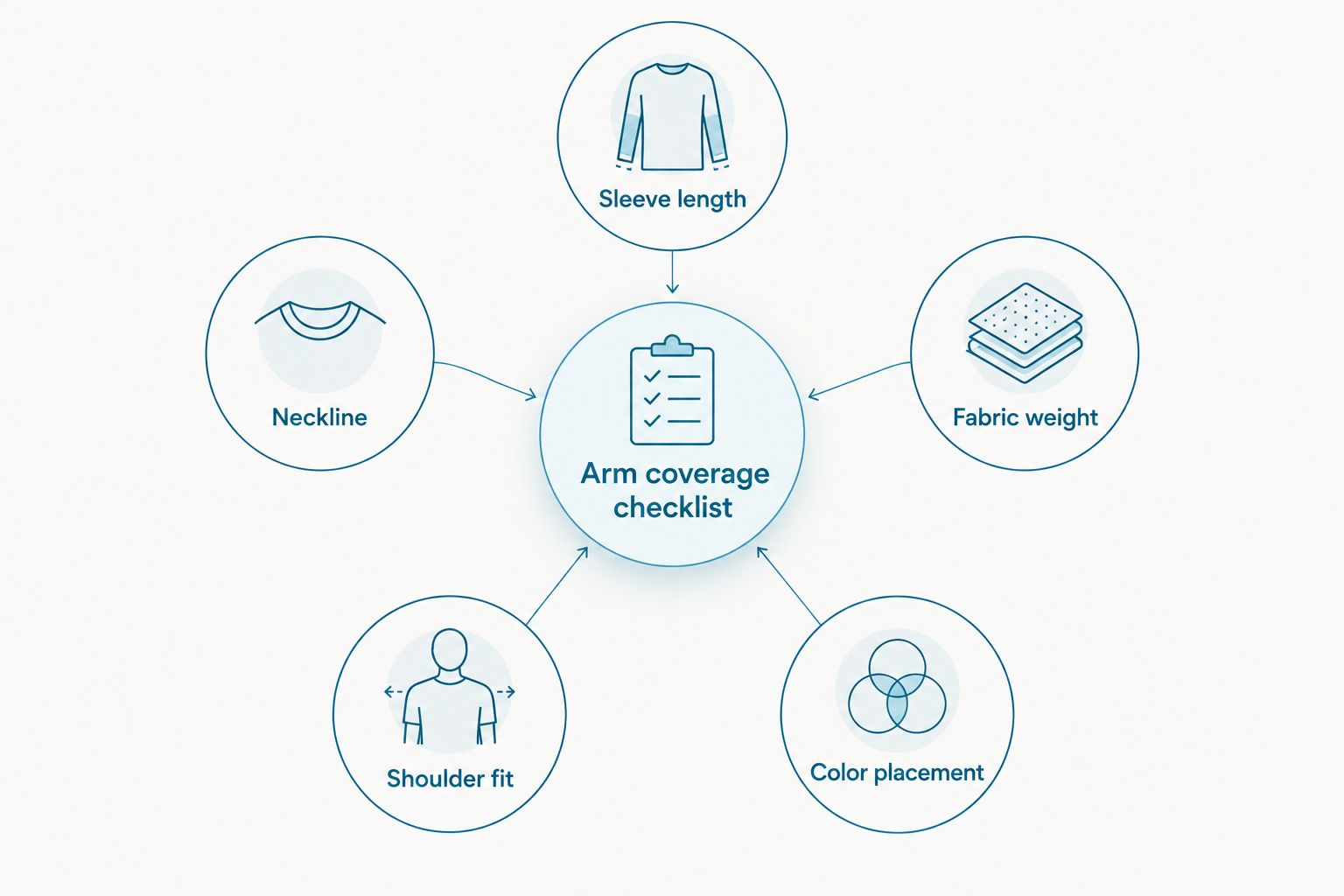
How to choose plus size tops that hide arms
Choose the right sleeve length first
Sleeve length is the first filter, before color, print, or fit through the body.
- Full long sleeve: covers the entire arm to the wrist, the most reliable option
- 3/4 sleeve dolman: covers the bicep, leaves the forearm exposed — works under a blazer
- Bell or bishop sleeve: covers loosely, breathable enough for warm weather
- Skip cap sleeves and flutter sleeves: both end right at the widest part of the upper arm
Pick necklines that redirect attention
The neckline works with the sleeve, not against it, once coverage is decided.
- V-neck: draws the eye down the center, away from the shoulder line
- Off-shoulder with a long sleeve: opens the collarbone while keeping the arm covered
- Boat neck: widens the shoulder line, best paired with a fitted long sleeve
- Turtleneck: full coverage from collar to wrist, ideal for structured layering
Layer with cardigans and kimonos
Layering doubles the coverage of any short-sleeve piece already in a closet without buying a full new wardrobe.
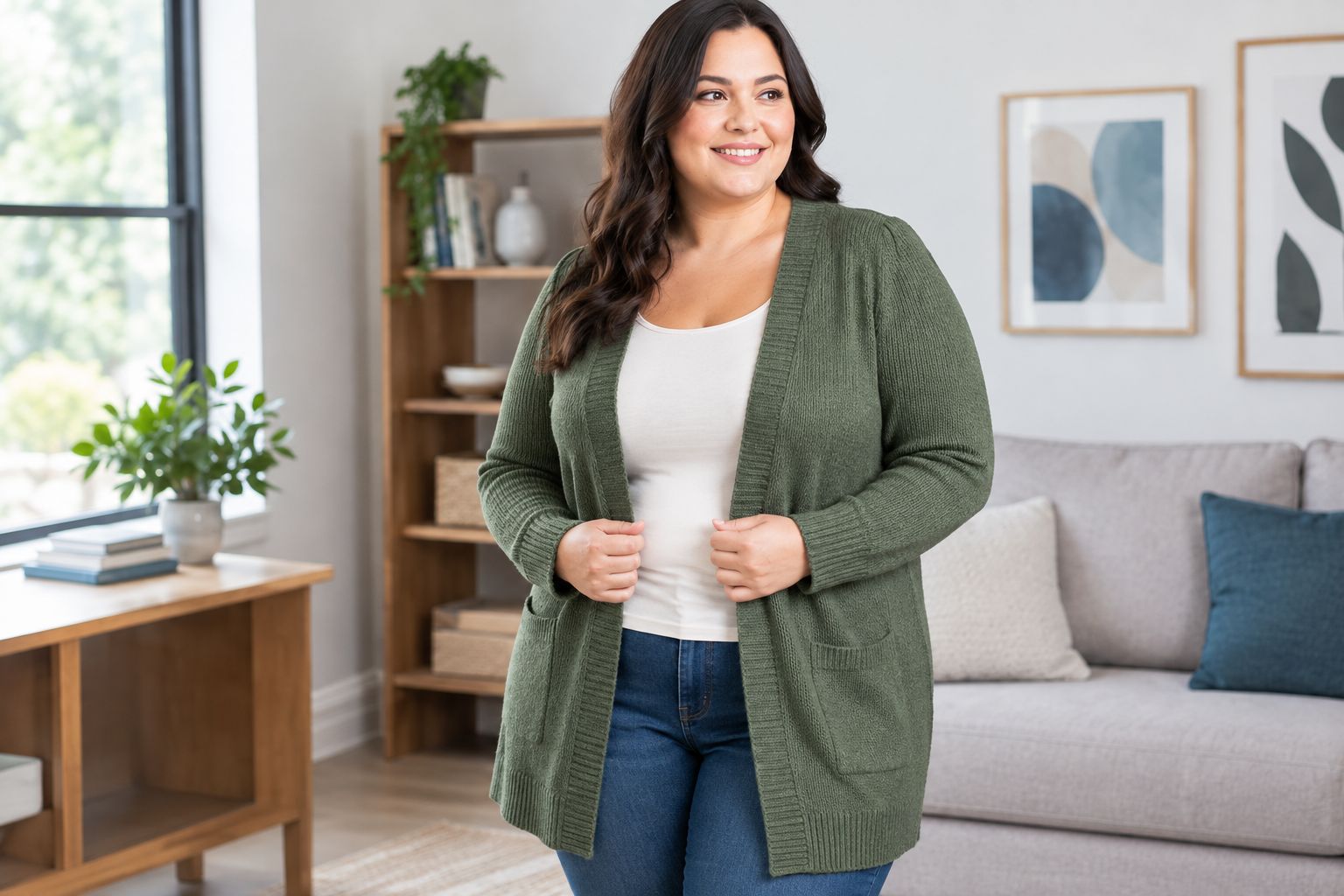
- Open-front rib knit cardigan over a tank or crop top for year-round coverage
- A white rib-knit cardigan layers over anything sleeveless already owned
- Kimono or duster with side slits keeps the torso light in warm months while covering the arms
- Faux fur or bomber jacket adds coverage plus texture for cooler months
Choose fabric weight over fit
Fabric decides whether a sleeve clings and shows the arm's shape or actually hides it.
- Rib knit and ponte hold shape at the bicep without pulling tight
- Thin jersey clings and shows every seam — avoid it for this purpose
- A beige hacci sweater drapes rather than clings, heavier than basic jersey
- Structured woven fabric holds its shape better through the arm than most knits
Fit the shoulder and bicep before the torso
A top that fits the chest can still cut into the arm — check the shoulder seam first.
- Size up in the sleeve only if the brand offers extended sizing separately from the torso
- A shoulder seam sitting past the actual shoulder point means the sleeve runs small, regardless of torso fit
- Raglan construction, where the seam runs diagonally to the collar, fits a wider bicep more comfortably than a set-in sleeve
- If the cuff is tight but the torso fits, size up and tailor the side seam instead of the sleeve
Match color and pattern placement
Color and print placement finish the job sleeve length and fabric already started.
- Solid dark sleeves in black, burgundy, or turquoise recede visually
- Horizontal stripes across the bicep widen the visual line — avoid them there
- Vertical seams or ribbing on the sleeve lengthen the arm
- Save prints and color-blocking for the torso, keep sleeves solid


Coverage options ranked for plus size shoppers
| Option | Best for | Key limitation |
|---|---|---|
| Long sleeve knit top | Everyday coverage, layering base | Runs tight through the bicep in cheap knits |
| Open-front cardigan | Adding coverage over existing tops | Needs a base layer underneath |
| Turtleneck sweater | Full coverage top to wrist | Too warm past early spring |
| Kimono or duster with slits | Warm-weather coverage | Doesn't close, less coverage in motion |
| 3/4 dolman sleeve | Partial coverage, office settings | Leaves the forearm exposed |
A red turtleneck sweater is the single most complete coverage option on this list — the tradeoff is heat, not fit.
Common mistakes plus size shoppers make
- Buying by torso size alone and ignoring sleeve opening width — a top that fits the chest can still cut into the arm.
- Choosing cap sleeves because "it's still a sleeve" — cap sleeves end exactly at the widest point of the upper arm.
- Layering with a blazer that has a narrow set-in sleeve, which restricts movement more than an unlined cardigan does.
- Sizing up the whole garment instead of the sleeve, leaving the shoulder seam sagging past the actual shoulder point.
- Picking a top based on print alone; thin jersey clings regardless of how loose the cut looks on the hanger.
FAQ
What tops are best for hiding arms if you're plus size?
Long sleeve rib knit or ponte tops with a fitted (not baggy) shoulder seam cover the arm best in 2026. Turtlenecks and open-front cardigans are the two most reliable layering options.
Do 3/4 sleeves count as arm coverage?
3/4 sleeves cover the bicep but leave the forearm exposed, so they count as partial coverage. They work well under a blazer or cardigan when full coverage isn't required.
Is a cardigan enough to cover arms without buying new tops?
Yes — an open-front long sleeve cardigan layers over any sleeveless or short-sleeve top already owned. It's the fastest way to add coverage without replacing a wardrobe.
What sleeve style is worst for hiding upper arms?
Cap sleeves and flutter sleeves are the worst choice because they end right at the widest point of the upper arm, which draws attention to exactly that spot.
Should plus size tops fit loose or fitted through the sleeve?
Fitted but not tight is the target — a sleeve that's too loose bunches at the elbow, and one that's too tight prints every seam onto the arm.
Are turtlenecks good for plus size arm coverage?
Turtlenecks give the most complete coverage from collar to wrist, but they run warm and work best from fall through early spring rather than summer.
What fabric hides arms best?
Rib knit, ponte, and hacci sweater knit hold their shape at the bicep without clinging, unlike thin jersey which shows every seam.
Can dark colors alone make arms look smaller?
Dark solid colors on the sleeve recede visually and help, but color alone doesn't replace correct sleeve length and fabric weight for actual coverage.
One last thing
Most guides skip this: raglan sleeve construction, where the seam runs diagonally into the collar instead of around the shoulder, fits a wider bicep more comfortably than a set-in sleeve at the same stated size. That's because it removes the seam that normally sits right at the widest point of the arm. Check the sleeve seam before adding to cart in 2026, not just the size tag.