Plus Size Sweater Dresses 2026: What Actually Fits
Plus size sweater dresses are one-piece knit dresses cut with extra room through the bust, waist, and hip so a single layer replaces a sweater-plus-skirt outfit for fall 2026, with no pulling at the zipper and no gap at the button placket. The fit math is different for this segment than for straight-size shopping: sleeve width, rise on the hip, and knit recovery matter more than trend prints, because a dress that clings in the wrong place gets worn twice and shelved.
- Plus size sweater dresses with a turtleneck or cowl neck hide bulk at the collarbone better than crew necks in fall 2026.
- A-line and wrap silhouettes move more forgivingly across the hip than bodycon knits for all-day wear, not just photos.
- A rib-knit cardigan or hacci sweater turns one sweater dress into three different outfits without buying more dresses.
- Skip any sweater dress without real stretch recovery at the waist seam — it rides up within an hour of sitting.
Why plus size sweater dresses matter for fall wardrobes
A sweater dress does the job of three garments at once: base layer, warmth, and shape. For plus size shoppers that matters more, not less, because layering a fitted top under a skirt often means fighting two size charts instead of one.
The segment's real constraint isn't warmth, it's fit consistency across a single garment. A dress that's cut generously at the bust but narrow at the sleeve, or roomy at the hip but tight at the forearm, fails the fitting-room test even when the size label is right. A well-cut long sleeve mini dress in a knit fabric solves that by moving with the body instead of against it, which is the whole appeal of the category for fall 2026.
How to choose a plus size sweater dress for fall 2026
1. Confirm your fit before you fall for the print
A flattering neckline on a dress that's tight through the upper arm still gets returned. Measure before you shop, not after the package arrives.
- Check the brand's own size chart against your bust, waist, and hip — not a size you wore in a different brand
- Measure sleeve circumference at the widest point of your upper arm, not just length
- Look for "stretch" or "recovery" in the product description; a knit with no stretch behaves like woven fabric
- Try the dress seated, not just standing, since hem and waist seam behavior changes completely once you sit
2. Pick a silhouette that carries its own weight
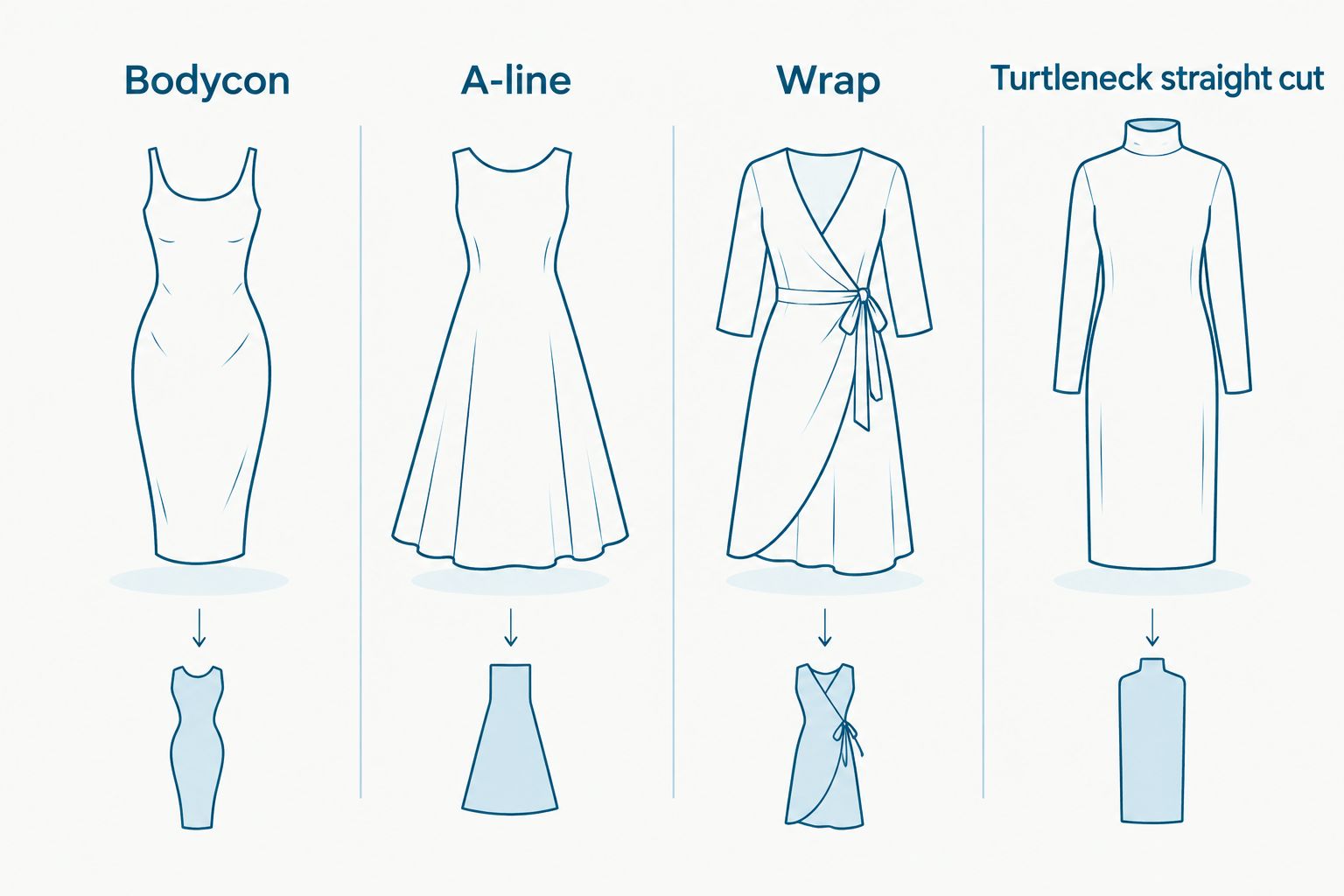
Silhouette decides whether the dress needs a shapewear layer underneath or stands on its own. Bodycon knits define the waist but need a slip against static; A-line and wrap cuts skip that step entirely.
- Bodycon: best for defined waist and hip, needs a static-guard slip underneath
- A-line: best for all-day comfort and sitting through a full workday
- Wrap: best for adjusting fit across bust sizes without a tailor
- Turtleneck straight cut: best for layering under a coat without bulk at the neck
3. Match the knit to your actual fall temperature swings
A hacci knit or acrylic blend reads as "fall sweater dress" but behaves very differently once the temperature actually drops. Thinner knits work through October; heavier cable and turtleneck knits carry into December without a coat underneath.
- Lightweight rib knits for indoor wear and early fall, roughly 60-70°F days
- Mid-weight hacci or French terry for daily wear once temperatures dip below 50°F
- Cable knit or faux fur trim for outdoor wear in the coldest stretch of winter
- Acrylic-cotton blends resist pilling better than 100% acrylic after repeated washes
4. Layer the accessories, not another sweater
Once the dress fits, the accessory layer does the seasonal work — swapping a cardigan or boots changes the whole look without touching the base garment.
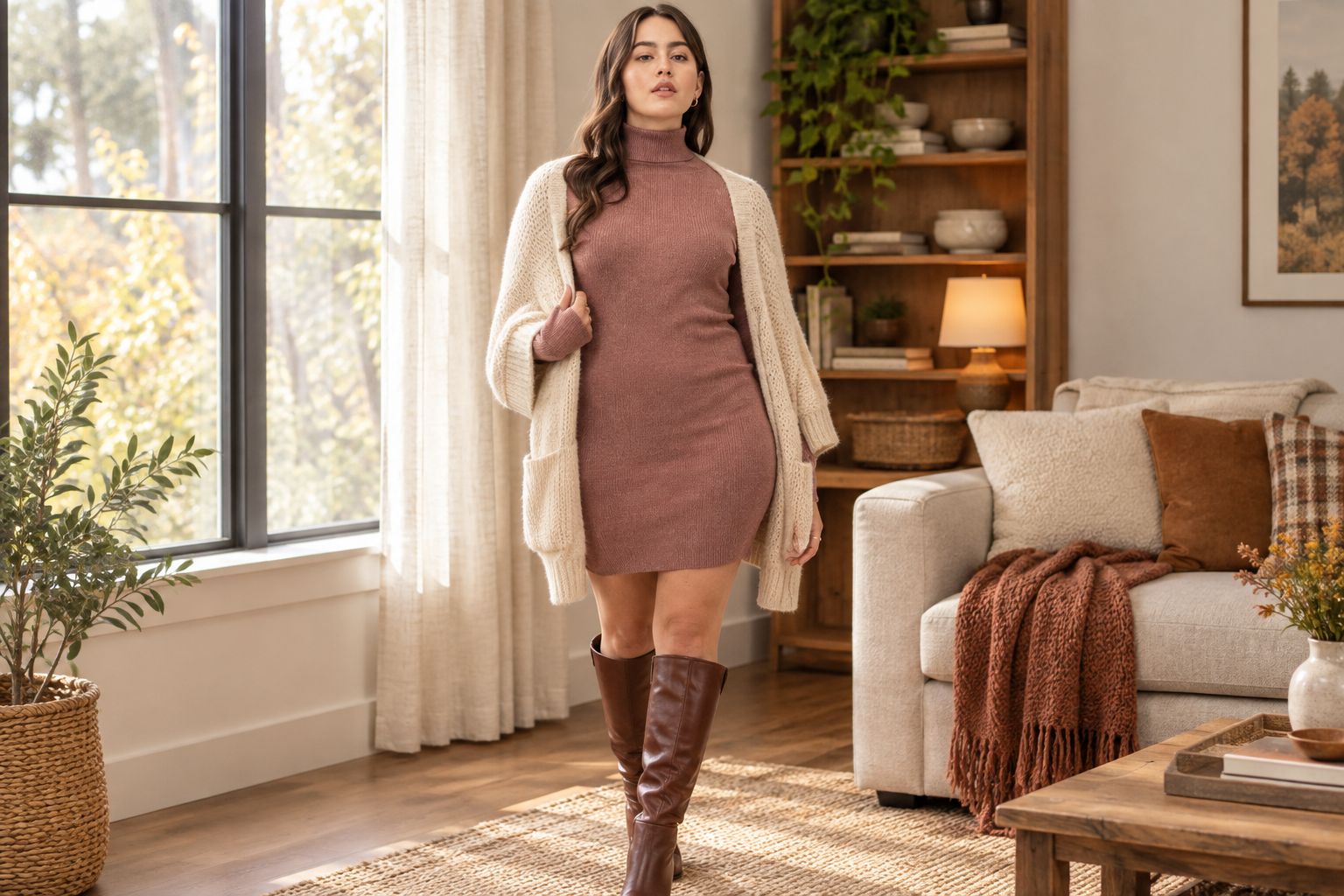
- Add an open-front rib knit cardigan over a sleeveless or short-sleeve sweater dress for cooler days
- Knee-high boots extend a mini sweater dress into the 40s without adding a coat
- A wide belt reintroduces waist definition on an A-line cut without altering the size
- Opaque tights in a neutral shade close the gap on cold-leg days without changing the outfit's color story
5. Order the faster path when hunting for the right cut takes too long
Measuring, comparing silhouettes, and reading five product descriptions is the manual route, and it works. It also takes an evening. A shorter path is picking from cuts already built for the fit points above.


6. Style one dress three ways for the week
One sweater dress covers Monday to Friday if the accessory layer changes each time. That's the actual value of the category over buying separates.
- Day one: dress alone with a hacci sweater swapped in for texture, flats
- Day two: dress plus cardigan, ankle boots, no belt
- Day three: dress belted, knee-high boots, statement earrings
Plus size sweater dress silhouettes compared
| Silhouette | Best for | Key limitation |
|---|---|---|
| Bodycon sweater dress | Curvier frames wanting waist definition | Clings to static-prone tights, needs a slip |
| A-line sweater dress | Sitting all day, everyday wear | Less waist definition than bodycon |
| Wrap sweater dress | Adjusting fit across cup sizes | Can gap at the bust if the tie loosens |
| Turtleneck mini/midi | Layering under a coat | Warmest option, least breathable indoors |
A-line wins for daily wear in 2026 if you sit at a desk most of the day; bodycon wins for a single evening out, not a nine-hour shift.
Common mistakes plus size shoppers make with sweater dresses
- Shopping by a size worn in a different brand. Plus size sizing has zero standardization across labels; the same "1X" varies by inches depending on the maker.
- Choosing all-black to "look slimmer." Flat black skips texture and shape, which does more for the silhouette than color ever does.
- Ignoring sleeve width against forearm size. A cropped balloon sleeve that cuts across the widest point of the arm reads tighter than the actual dress size.
- Skipping a foundational layer under bodycon knits. Static cling and visible lines show up within an hour without a slip or seamless layer underneath.
FAQ
What's the best plus size sweater dress for fall 2026?
An A-line turtleneck or cowl-neck cut in a mid-weight knit works best for daily fall wear in 2026 because it hides bulk at the collarbone and moves easily when seated.
Are sweater dresses flattering for plus size body types?
Yes, when the silhouette matches the body: A-line and wrap cuts flatter most plus size frames, while bodycon works best for shorter, structured wear rather than all-day comfort.
What length is best for a plus size sweater dress?
Midi length paired with boots gives the most coverage and warmth for fall 2026; mini lengths work better layered over tights or leggings.
Can you wear a sweater dress with boots?
Yes, knee-high boots are the most common pairing for a mini or midi sweater dress and extend the outfit into colder weather without adding a coat.
Is bodycon or A-line better for plus size?
A-line is better for everyday wear and sitting comfortably, while bodycon suits shorter outings where waist definition matters more than all-day ease.
How do you keep a sweater dress from clinging or riding up?
Wear a static-guard slip underneath and choose a knit with real stretch recovery at the waist seam; low-recovery acrylic knits ride up within an hour of sitting.
What fabric is best for a plus size sweater dress?
Acrylic-cotton blends resist pilling better than 100% acrylic after repeated washing, and hacci knits balance warmth with breathability for most of fall 2026.
How much layering does a sweater dress need for cold weather?
A cardigan and opaque tights usually cover temperatures down to the 40s; below that, a coat over a heavier cable-knit dress is the better call.
One last thing
Acrylic-heavy knits stretch out at the hem faster in the dryer than on the line — lay a sweater dress flat to dry once and the recovery at the waist seam lasts through the rest of the fall 2026 season instead of one wash cycle.