Plus Size Dresses for Teachers: Best Picks for 2026
Plus size teacher dresses are classroom-ready dresses built to survive a full school day of standing at the board, bending over desks, and walking hallways between periods, not just a photo on the first day back. A teacher's dress has to do more work than an office dress: it needs sleeves that don't ride up when reaching for the top shelf, a hem that doesn't shift when kneeling next to a student's desk, and fabric that shrugs off dry-erase marker and glue-stick smudges.
- Plus size dresses for teachers work best in midi lengths, 3/4 or long sleeves, and wrinkle-resistant knit fabric for the 2026 school year.
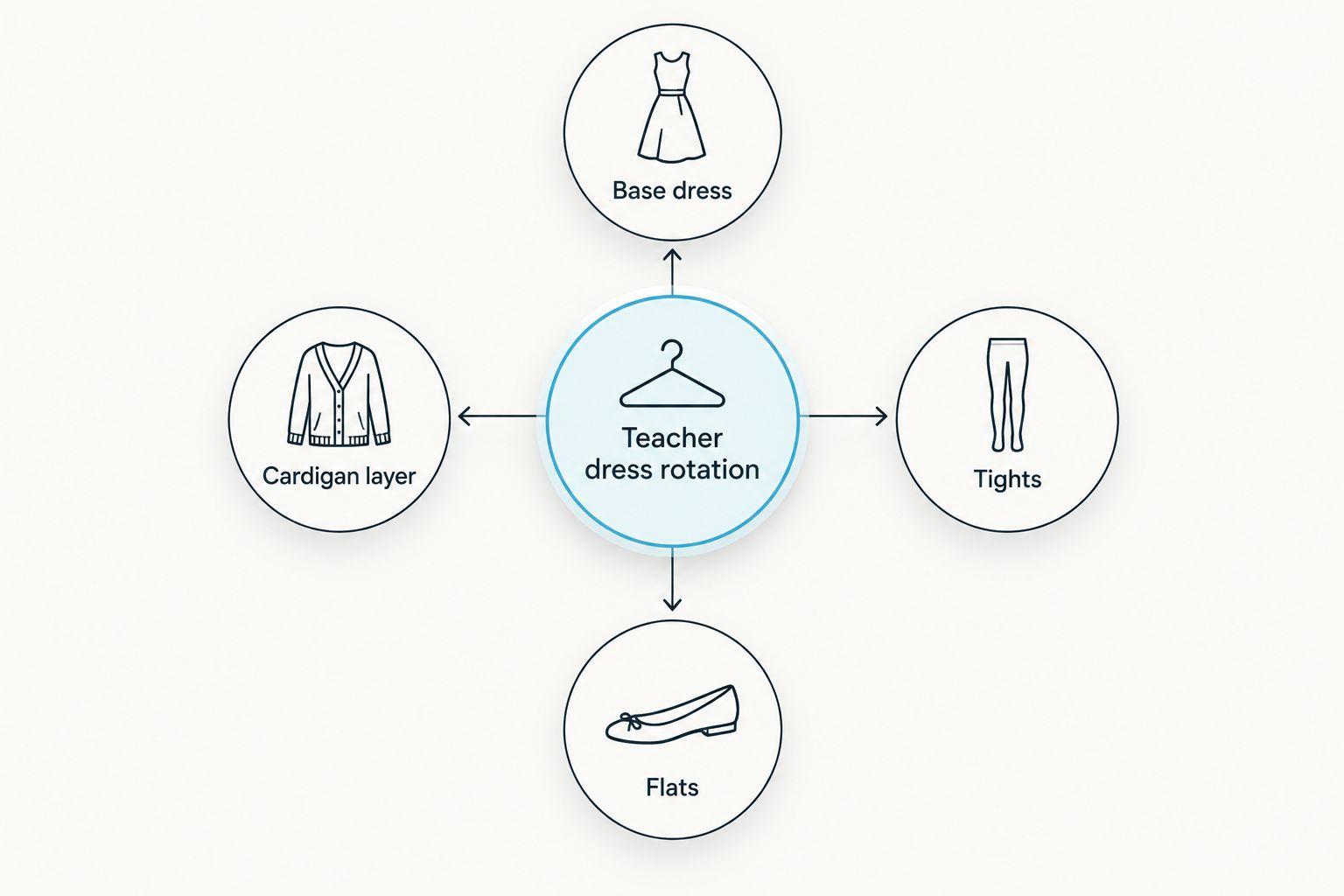
- A four-piece rotation of one dress plus a rib knit cardigan covers hot classrooms, cold hallways, and everything in between.
- Satin maxi dresses and spaghetti-strap mini dresses belong at school events, not in daily teacher rotation.
- Pockets, breathable knits, and machine-washable fabric matter more for classroom durability than trend prints.
Why classroom-ready dresses matter for teachers
A teacher's school year runs roughly 180 days, and most of those days involve six to seven hours on your feet with almost no wardrobe changes available between periods. That's a different job than sitting at a desk, and it's why a dress that photographs well in a mirror selfie can still fail by third period. The right teacher dress is judged by how it moves, not how it poses.
Shopping Therapy's plus size dress collection is built around trendy, inclusive sizing rather than office-formal cuts, which matters for teachers who need clothes that flex through a real school day instead of a boardroom. Fit-and-flare and shift silhouettes give room to bend and reach; bodycon and spaghetti-strap styles don't.
How to build a teacher wardrobe with plus size dresses
Measure your day, not just your body
Before buying anything for back-to-school 2026, map what your actual school day demands. A kindergarten teacher who sits on the floor needs different range of motion than a high school teacher who lectures from behind a podium.
- Track how often you bend, kneel, or reach overhead in a typical day
- Note whether your room runs cold (near a vent) or warm (afternoon sun)
- Check your school's dress code for hemlines and sleeve requirements
- List the fabrics that have failed you before (dry-clean-only, sheer, stiff)
- Flag any days requiring extra movement, like recess duty or lab work
Pick fabrics that survive a full school day
Knit fabrics resist wrinkles from sitting at a desk and bounce back after bending. Woven cottons breathe but wrinkle fast; satin and silk-blend fabrics look polished for an evening but crease and snag on classroom furniture.
- Choose ribbed or ponte knits for daily wear over satin or chiffon
- Test stretch recovery by scrunching fabric in your hand before buying
- Prioritize machine-washable dresses over dry-clean-only pieces
- Avoid sheer fabrics that need a slip layer you'll forget by 7 a.m.
- Look for fabric blends with at least some spandex or elastane for movement
Choose a length that clears the desk and the stairs
Mini dresses can gap or ride up when you bend over a student's desk; floor-length maxi dresses catch on chair legs and stairwells. Midi length, generally hitting between the knee and mid-calf, is the safest daily length for teaching.
- Sit down and bend forward in the dressing room before buying
- Walk up a few stairs to check the hem doesn't restrict your stride
- Save mini lengths for casual Fridays if your school allows them
- Reserve floor-length or high-slit maxi dresses for evening school events
- Pair shorter hems with opaque tights for classroom coverage
Build a layering system for hallway-to-classroom swings
School buildings run hot in some wings and cold in others, and a single dress rarely handles both. A long sleeve rib knit cardigan solves this without adding bulk under a blazer or coat, and it works over nearly any sleeveless or short-sleeve dress in rotation.
- Keep one cardigan at your desk year-round for surprise AC blasts
- Choose open-front cardigans so they layer over any neckline
- Stock at least two cardigan colors to avoid repeating the same look
- Add tights or leggings under dresses for cold months without losing the silhouette
- Skip bulky sweaters that add weight under a blazer for pickup duty
Shopping Therapy carries four cardigan colorways in this rib knit style — coral, white, pink, and turquoise — which makes it simple to rotate the same silhouette without repeating an outfit twice in one week.
Match necklines and sleeves to your teaching style
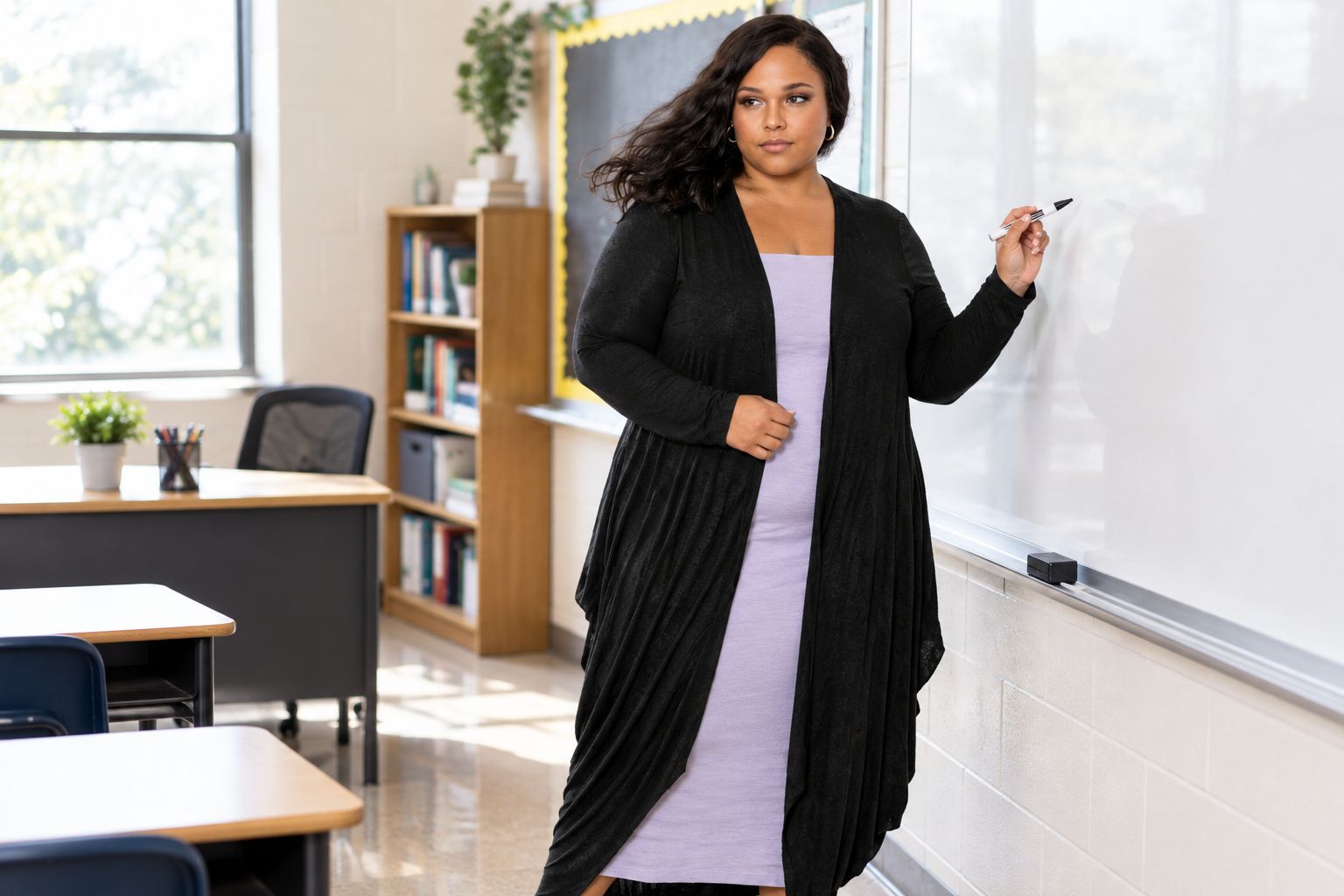
A plunging V-neck that looks fine standing still can gape when you lean over a desk. Long or 3/4 sleeves cover more of the arm during overhead reaches at the whiteboard, and higher necklines reduce the need to check yourself all day.
- Pick moderate V-necks or crew necks over deep plunge styles
- Choose 3/4 or long sleeves for whiteboard and projector work
- Test the neckline by leaning forward, not just standing upright
- Avoid off-the-shoulder styles on days with heavy lifting or bending
- Save halter and strapless necklines for after-school events only
Stock a rotation, not a wardrobe
Teachers don't need twenty dresses for back-to-school 2026 — they need four or five that mix with cardigans, sweaters, and flats to create ten or more outfit combinations. A print dress like a v-neck floral dress reads fresh paired with a solid cardigan on Monday and bare-armed with flats on a warmer Friday.
- Choose 4-5 dresses that share a similar silhouette for easy swapping
- Mix one bold print with three or four solid colors
- Rotate the same two cardigans across the full week
- Keep one dress in reserve for parent-teacher conference days
- Retire any dress that needs ironing before every single wear


Dress options for teachers, compared
| Option | Best for | Key limitation | Verdict |
|---|---|---|---|
| Long-sleeve knit shift dress | Cold classrooms, all-day board writing | Less breathable in warm months | Buy |
| Midi dress with 3/4 sleeves | Elementary teachers who bend and kneel often | Wrinkles if fabric has no knit stretch | Buy |
| Sleeveless shift + cardigan combo | Buildings with wide temperature swings | One extra layer to manage daily | Buy |
| Spaghetti-strap mini dress | After-school events, not the classroom | Dress code risk, strap visibility | Skip for daily wear |
| Satin maxi dress | Graduation, formal school events | Too dressy and slippery for daily teaching | Hold for events only |
Common mistakes teachers make buying dresses
- Buying deep V-necks that gape the moment you lean over a student's desk.
- Skipping pockets entirely, then juggling a phone, hall passes, and markers with no free hand.
- Choosing dry-clean-only fabric that can't handle a marker smudge or glue-stick mishap.
- Shopping for the photo, not the day — picking satin or sequin pieces meant for evening events as daily classroom wear.
- Skipping the cardigan step, then freezing in an air-conditioned wing or sweating in an un-cooled one by 10 a.m.
FAQ
What is the best fabric for plus size dresses for teachers?
Ribbed or ponte knit fabric with some stretch is the best choice for teacher dresses because it resists wrinkles from sitting and bounces back after bending. Woven cotton breathes well but wrinkles fast, and satin or chiffon should stay reserved for events.
Are midi dresses better than mini dresses for teaching?
Yes, midi length is generally the safer daily choice because it clears a desk when you bend over without gaping or riding up. Mini dresses work fine for casual days but need opaque tights for classroom coverage.
How many dresses does a teacher need for back-to-school 2026?
Four to five dresses in a similar silhouette, mixed with two cardigans, typically create ten or more outfit combinations for a full teaching week. A larger wardrobe isn't necessary if the pieces rotate well together.
Can plus size dresses have pockets?
Some plus size dress styles include side-seam pockets, though many trend dresses skip them for a cleaner silhouette. Check the product description before buying if pockets are a daily requirement for holding markers or a phone.
What length dress is appropriate for teachers?
Midi length, hitting between the knee and mid-calf, is appropriate for most school dress codes and classroom movement. Mini lengths need tights for coverage, and floor-length maxi dresses can catch on stairs and chair legs.
How do I layer a dress for cold classrooms without bulk?
An open-front long sleeve rib knit cardigan adds warmth without adding bulk under a blazer, since it layers over almost any dress neckline. Tights under the dress handle the rest of a cold snap.
Is a cardigan or blazer better over a teacher dress?
A rib knit cardigan is generally more practical for daily teaching because it's lighter, machine-washable, and moves easily during reaching and bending. A blazer reads more formal and works better for parent-teacher conferences.
Do plus size dresses need to be machine washable?
Machine-washable fabric matters more for teacher dresses than for most other work wardrobes because marker, glue, and paint stains happen weekly. Dry-clean-only dresses are harder to maintain across a full 180-day school year.
One last thing
The single biggest wardrobe mistake teachers make isn't the dress at all — it's forgetting the cardigan. A dress rotation without a layering piece fails on the first cold snap or the first overheated afternoon, no matter how well the dress itself fits. Build the cardigan into the plan from day one of back-to-school 2026, not as an afterthought in October.